

Life After Section 21: How Possession Really Works Now
Thu 23 Jul 2026
Shirley Moralee, Lettings Manager
That has now changed.
When the Renters' Rights Act came into force in May 2026, Section 21 was abolished, and all possession claims must now be made under Section 8 of the Housing Act 1988. It marks one of the biggest changes to the private rented sector in decades and introduces a much more evidence-based approach to possession that relies on the court process. For landlords, the focus has shifted away from simply following a quick process, and now success depends on having the correct legal ground, serving the right notice and keeping clear and thorough records throughout the tenancy.
For landlords, the focus has shifted away from simply following a quick process, and now success depends on having the correct legal ground, serving the right notice and keeping clear and thorough records throughout the tenancy.
Section 8 is now the only route to possession
Unlike the previous Section 21 process, Section 8 requires landlords to rely on a specific legal ground in order to regain possession of their rental property.
Whether the reason is rent arrears, anti-social behaviour, selling the property or moving back into it yourself, each ground has its own rules, notice periods and evidence requirements. Every possession claim will also involve a court hearing, meaning that landlords should expect the process to take longer than they may have experienced previously if they used the Section 21 route.
While this may sound quite daunting, there is a way forward. It is now very important to choose the right tenants, make sure they are referenced correctly, and discuss the tenancy agreement and party expectations before signing. Once the tenancy is in place, keep open lines of communication at all times and ensure tenancies are well-managed and everything is documented. This will help to ensure that evidence is available when needed, should future problems arise.
The possession grounds most landlords are likely to encounter are:
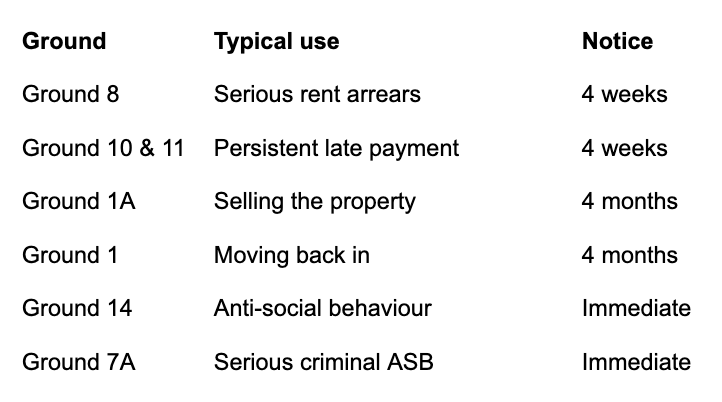
There are now 37 different grounds for possession, but most private landlords are likely to rely on only a handful.
1. Rent arrears
Ground 8 is the possession ground most commonly used for serious rent arrears. To rely on it, a tenant must owe at least three months' rent when the notice is served and still owe at least three months' rent when the case reaches court.
If the arrears have reduced below that level, Ground 8 can no longer be used on its own. In those circumstances, landlords may also rely on Grounds 10 and 11, which relate to tenants who have fallen into arrears or have persistently paid their rent late. Unlike Ground 8, these are discretionary grounds, so the judge will decide whether it is reasonable to grant possession.
2. Selling the property
If your circumstances change and you decide to sell your rental property, Ground 1A provides a mandatory route to regain possession, provided you genuinely intend to place the property on the market.
However, there are important safeguards built into the legislation. Ground 1A cannot be used during the first 12 months of a tenancy, so landlords should be aware that selling with vacant possession may not always be possible straight away.
Landlords will also need to demonstrate that the intention to sell is genuine. This may include evidence such as instructing an estate agent, correspondence with a solicitor or other documentation showing that the property is genuinely being prepared for sale.
It's also worth remembering that if possession is obtained using Ground 1A, the property cannot normally be re-let for 12 months. This is designed to prevent landlords using the ground simply as a way of ending a tenancy without actually selling.
For landlords considering a sale, seeking advice at an early stage can help ensure the correct process is followed and avoid unnecessary delays.
3. Moving back into the property
There may come a time when you need your rental property back for your own use or for a close family member. Ground 1 allows landlords to seek possession in these circumstances and, like Ground 1A, it is a mandatory ground provided all of the legal requirements are met.
As with selling, this ground cannot be used during the first 12 months of a tenancy, and landlords will need to demonstrate that the intention to occupy the property is genuine. Depending on the circumstances, this may include evidence of a change in family circumstances or plans to move back into the property.
Because these grounds are designed for genuine changes in a landlord's circumstances, careful preparation and supporting evidence are essential before serving notice.
4. Anti-social behaviour
The legislation continues to provide routes for landlords dealing with serious anti-social behaviour or criminal activity.
Depending on the circumstances, these cases may allow immediate notice to be served, although the evidence presented to the court will be critical.
Good evidence has never been more important.
Record keeping
Rather than gathering information once a tenancy has broken down, landlords should think of tenancy management as an ongoing process of maintaining clear, accurate records.
This might include:
- Rent schedules showing payments received and any arrears.
- Inventories and check-in documentation.
- Property inspection reports.
- Photographs documenting the property's condition.
- Copies of correspondence with tenants.
- Confirming telephone conversations by email.
- Records of maintenance issues and repairs.
- Notes relating to complaints or anti-social behaviour.
Small mistakes can lead to significant delays
Possession claims are becoming increasingly technical.Using the wrong notice, relying on the incorrect possession ground or failing to provide sufficient supporting evidence could result in a claim being dismissed, meaning the process has to start again.
With court times already under pressure, even relatively small procedural errors may add months to the overall timescale.
For many landlords, ensuring everything is handled correctly from the outset can save both time and unnecessary expense.
Professional management is about more than collecting rent
Many landlords understandably think of a managing agent as someone who deals with tenant enquiries, maintenance and monthly rent collection.Today's legislation means professional management offers much more than that.
Regular inspections, thorough documentation, compliant paperwork and accurate record keeping all help ensure that, should possession ever become necessary, landlords are in the strongest possible position.
While no landlord wants to find themselves facing possession proceedings, being properly prepared can make a significant difference if the situation arises.
Looking ahead
The private rented sector continues to evolve, and landlords are operating in an increasingly regulated environment.Fortunately, most tenancies remain positive and trouble-free. However, understanding how possession now works, and ensuring the correct procedures are followed throughout a tenancy, provides valuable reassurance for the future.
At Wills & Smerdon, we've been supporting landlords across Surrey for generations. Whether you're letting your first property or managing an established portfolio, we're here to help you stay compliant, protect your investment and navigate legislative changes with confidence.
If you would like advice on the recent changes to landlord legislation or would like to discuss professional property management, we'd be delighted to help.
Call our lettings team on 01483 284 141.